To schedule an appointment call: 1 (800) 605-0031
Follow Us :


To schedule an appointment call: 1 (800) 605-0031
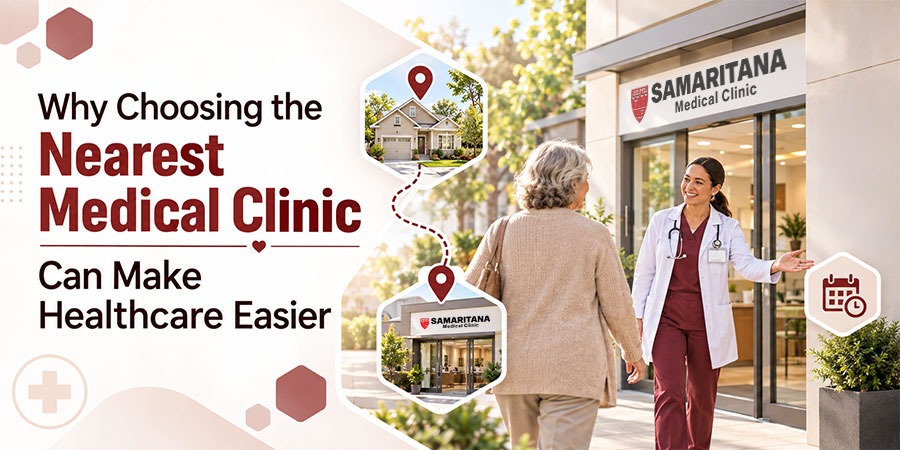
When healthcare is close by, it is easier to fit into your day. You spend less time dealing with traffic, parking, or arranging transportation.
It can also make follow-up visits less of a hassle. That matters when you need another checkup, test, or treatment after your first visit.
A nearby clinic can also give you a familiar place to turn to for routine and non-emergency care, instead of starting from scratch every time.
The biggest benefit of proximity is simple. It takes less time to get there.
A nearby clinic lets you keep routine appointments easy. It can also support continuity of care.
Returning to the same healthcare team means your providers may have access to previous notes, medication information, test results, and treatment plans. That background can make follow-up visits easier to manage.
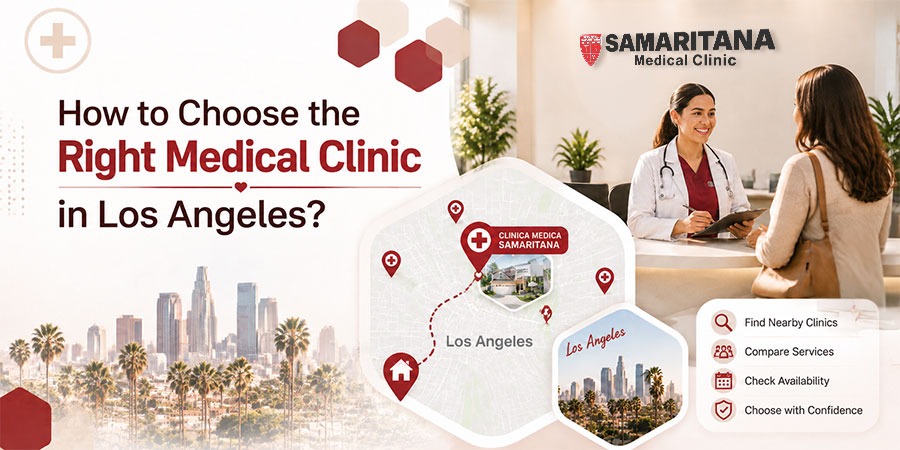
Los Angeles is a big city, so the closest clinic isn’t always the best clinic.
When comparing a medical clinic in Los Angeles, look at more than the distance from your home.
Remember to ask a couple of things mentioned below:
An urgent care clinic in Los Angeles can be useful when you have a problem that needs prompt attention but is not a life-threatening emergency.
Depending on the facility, common examples include
Urgent care facilities can be particularly helpful when your regular doctor’s office is closed or an appointment is not available soon enough.
However, urgent care comes with limits.
Severe chest pain, major breathing difficulty, or other potentially life-threatening symptoms require emergency care rather than a convenient clinic.
A neighborhood health clinic can support you much more than an unexpected sick visit.
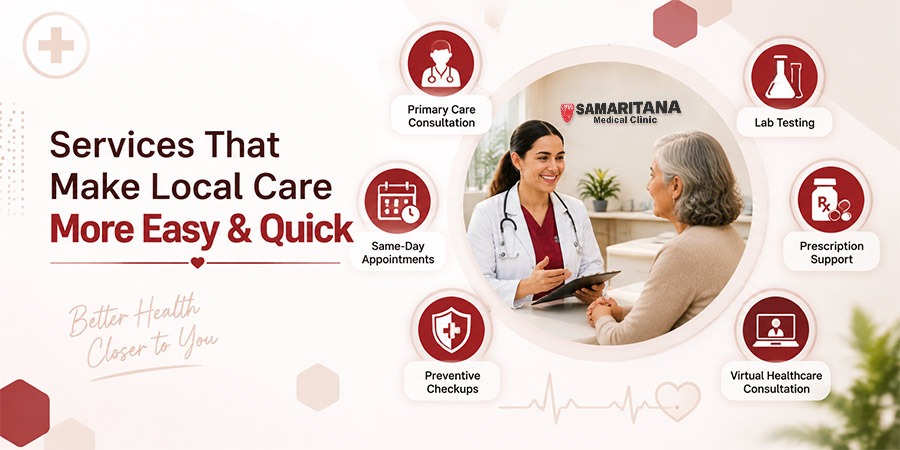
Depending on the facility, services may include preventive care, family medicine, pediatric care, selected diagnostic testing, injury evaluation, and follow-up.
That makes it worth looking at the full range of services before choosing a clinic.
You may not need every service today. But knowing they are available can make the clinic more useful over time.
Older adults often have healthcare needs that require regular monitoring rather than one-time treatment.
Some of the senior care facilities include medication reviews, preventive screening, vaccination discussions, evaluation of new symptoms, and referrals when specialist care is needed.
A family medicine centre gives both adults and children a familiar place for many common healthcare needs.
Depending on the provider, that can include preventive care, common illnesses, chronic-condition follow-up, medication discussions, and referrals.
Children need healthcare that takes their age, growth, development, and family situation into account.
Nearby pediatric care services can be useful for well-child visits, common childhood illnesses, developmental discussions, and preventive care.
When a provider needs to check for a possible fracture or another condition that can be evaluated with plain radiography, x-ray can make the process more convenient.
When examination and imaging are available in the same setting, the provider can connect the physical findings with the results and explain the next step.
However, some injuries still require advanced imaging or specialist care, so an x-ray is not always the end of the evaluation.
Medical laboratories can help clinicians investigate symptoms, monitor certain health conditions, or support preventive care.
Based on the clinic, testing may include blood work, urine tests, rapid infectious-disease testing, or samples sent to an outside laboratory.
A suspected broken bone should be evaluated promptly.
Depending on the injury and the clinic’s capabilities, fracture treatment may include examination, imaging, stabilization, pain-management guidance, and follow-up planning.
Severe deformity, an open fracture, major trauma, loss of circulation, or significant numbness may require emergency treatment instead.
These routine health exams review your medical history, medications, vital signs, current symptoms, and age-appropriate health priorities.
A physical fitness certificate may also be needed for school, sports, employment, or other programs. You can use this to discuss preventive care, vaccinations, and any concerns you’ve noticed.
Dental care is another part of maintaining overall health and comfort.
As per the facility and providers available, general care for teeth covers cleanings, preventive exams, tooth-pain evaluation, fillings, and guidance on gum health.
However, it’s still important to confirm exactly which dental services are available before your visit.
Sometimes you need care, but planning an appointment days ahead isn’t realistic.
A walk in medical clinic in Los Angeles can be useful for certain minor illnesses and injuries when you cannot easily schedule a traditional appointment.
That can be especially helpful for working adults, parents with changing schedules, or anyone dealing with an unexpected health concern.
Here is a checklist to follow before visiting the local clinic:
A medical clinic is not a substitute for emergency care. Make sure to head for urgent care center for symptoms such as:
Before settling on a clinic, consider the following table:
| What to Check | Why It Matters |
|---|---|
| Location | Makes routine and follow-up visits easier |
| Services | Ensures the clinic fits your healthcare needs |
| Providers | Confirms appropriate professionals are available |
| Diagnostics | Helps with testing or imaging when needed |
| Insurance | Gives you a clearer idea of coverage and costs |
| Referrals | Helps you access higher-level or specialist care |
| Follow-up | Makes ongoing care easier to manage |
| Access | Check appointment and walk-in options |
The value of a nearby medical clinic isn’t just the shorter drive. It’s the fact that routine care becomes easier to fit into your life.
Follow-ups are less of a burden. Families have a more practical option for everyday healthcare. And when a clinic offers several services under one roof, fewer appointments may require a trip somewhere else.
For people comparing nearby clinics, Samaritana Medical Clinic is one local option to consider when reviewing healthcare services in Los Angeles.
A nearby clinic saves travel time and makes routine visits and follow-ups easier.
Many clinics handle common illnesses, minor injuries, physicals, preventive care, and stable chronic conditions.
Go to the ER for severe chest pain, breathing trouble, stroke signs, heavy bleeding, major trauma, or loss of consciousness.
Yes. Clinics may review symptoms, test results, healing progress, medications, and ongoing treatment plans.
Check services, provider qualifications, insurance coverage, testing options, referrals, and follow-up support.