To schedule an appointment call: 1 (800) 605-0031
Follow Us :


To schedule an appointment call: 1 (800) 605-0031
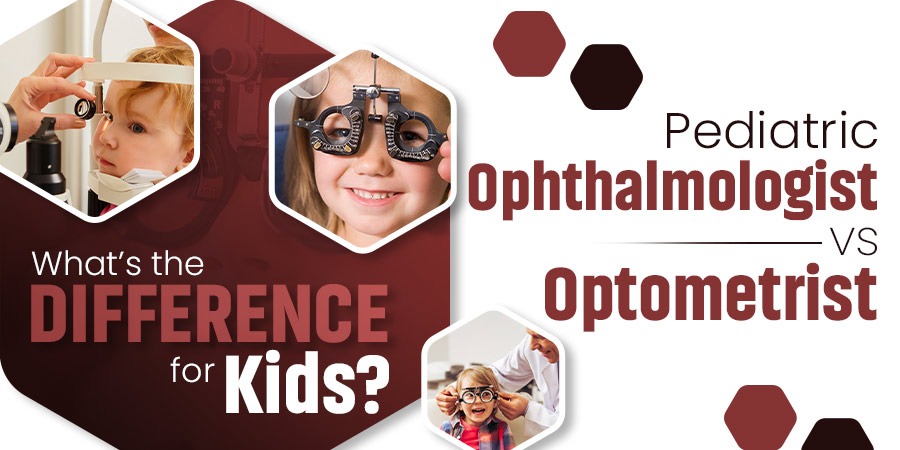
If your child struggles with vision, you need the right specialist. Many parents look for a pediatric ophthalmologist but don’t know how they differ from an optometrist. Both terms sound similar, but the training and scope of care aren’t the same.
Today, we’ll explain to you the differences between a pediatric ophthalmologist and an optometrist. You’ll learn who treats what, when to seek each provider, and how to make informed decisions about your child’s eye health.
A child’s eyes are still developing. During childhood, vision changes quickly. The brain and eyes work together to build visual skills.
Now, children may not know how to describe blurry vision. Many eye-related problems show up as behavior issues, learning struggles, or eye rubbing. Early detection is important. Untreated eye conditions may affect school performance and long-term eye health.
That’s why pediatric eye care requires specialized knowledge and training.
A pediatric ophthalmologist is a medical doctor specializing in kids’ eye conditions. This doctor, after completing medical school and a residency in ophthalmology, does an additional fellowship training in pediatric eye care.
A pediatric ophthalmologist diagnoses and treats the following conditions:
This specialist also performs surgeries when needed, prescribe medications, and handle serious eye problems, even structural ones.
If your child needs surgery or has a complicated eye condition, a pediatric ophthalmologist provides medical and surgical care.
An optometrist is a healthcare professional who focuses on vision care. These people complete a Doctor of Optometry degree. They don’t attend medical school.
An optometrist does the following:
Some optometrists focus solely on children. In the world of the web, the term ophthalmologist pediatric is often used incorrectly. Just remember that an optometrist isn’t an ophthalmologist. The primary difference between the two lies in medical training and surgical ability.
Despite everything we’ve discussed, an optometrist plays an important role in routine eye care. For many children, a vision check with an optometrist is the first step.
A pediatric ophthalmologist completes medical school and hospital-based residency training. They then complete fellowship training in pediatric ophthalmology.
An optometrist completes optometry school. They don’t perform surgery and don’t complete medical residency training.
A pediatric ophthalmologist treats medical and surgical eye diseases. They manage complex conditions and perform procedures in operating rooms.
An optometrist focuses on vision correction. They diagnose refractive errors, such as nearsightedness and farsightedness. They manage mild eye conditions and refer complex cases.
Only an ophthalmologist performs eye surgery. If your child needs strabismus surgery or cataract removal, a pediatric ophthalmologist handles that.
You need the help of a pediatric ophthalmologist if your child has:
Your primary care doctor or optometrist may refer you to a pediatric ophthalmologist for further evaluation.
Infants born premature often require evaluation by a pediatric ophthalmologist due to risk of retinal problems.
An optometrist works well for:
If your child fails a school screening, an optometrist often provides the next step in care.
If the optometrist identifies a medical condition, they refer to a pediatric ophthalmologist.
Amblyopia occurs when one eye develops weaker vision. Early treatment is critical to fix this condition. Treatment may include patching, glasses, or surgery depending on severity.
Strabismus causes the eyes to misalign. The eyes may turn inward, outward, upward, or downward. A pediatric ophthalmologist evaluates muscle balance and determines if surgery is required.
Progressive myopia often develops in childhood. An optometrist monitors vision changes. A pediatric ophthalmologist evaluates severe progression or complications.
Mild infections may be managed by an optometrist. Severe or recurrent infections often require evaluation by a pediatric ophthalmologist.
The American Academy of Ophthalmology recommends early vision screening. Pediatric eye exams help detect problems before children start school.
Many children never complain about vision issues. They adapt. Parents should watch out for the following signs:
Early evaluation reduces risk of long-term complications.
A pediatric ophthalmologist uses diagnostic tools like:
These tools help diagnose structural issues. Kids with glaucoma or retinal disorders require these advanced evaluations.
Optometrists also use diagnostic equipment. The difference lies in treatment authority and surgical access.
Myopia rates continue to rise across the world. Urban areas show higher rates from increased screen use and reduced outdoor time.
Many Asiatic countries report high childhood myopia prevalence. The rates in the USA are also on the rise. Early monitoring by a pediatric ophthalmologist or optometrist helps manage progression.
Access to pediatric eye specialists varies by region. Larger cities often have more subspecialty care.
Many insurance plans require a specialist’s referral. So, check your policy before scheduling an appointment.
Vision insurance often covers optometry visits. Medical insurance covers ophthalmology visits when managing disease or injury.
Understanding this difference helps avoid billing surprises.
Ask yourself the following questions:
If your child has a medical eye condition, seek a pediatric ophthalmologist. If your child needs glasses or a routine check, start with an optometrist.
Both professionals play a role in pediatric eye health.
You are your child’s advocate. It falls to you to schedule regular eye exams, monitor screen times, and encourage outdoor activity.
If something feels off, trust your instincts. Early evaluation prevents complications.
Children rarely explain vision problems clearly. Behavior changes often signal an issue.
A pediatric ophthalmologist and an optometrist serve different roles. Both protect your child’s vision. The difference lies in medical training and scope of care.
If your child has a complex or serious eye issue, consult a pediatric ophthalmologist. For routine vision correction, an optometrist works well.
Clear information almost always leads to better decisions. Early care protects long-term visual health.
A1. A pediatric ophthalmologist treats medical and surgical eye conditions in children. This includes strabismus, amblyopia, congenital cataracts, glaucoma, and complex retinal disorders.
A2. For routine vision checks and glasses prescriptions, an optometrist is appropriate. For complex or medical eye conditions, a pediatric ophthalmologist provides specialized care.
A3. Not all children with strabismus require surgery. A pediatric ophthalmologist evaluates severity and recommends treatment based on muscle alignment and visual development.
A4. Vision screening begins at infancy. Comprehensive exams occur before school age. High risk children need earlier evaluation by a pediatric ophthalmologist.
A5. Yes. Many children receive routine care from an optometrist and see a pediatric ophthalmologist for medical management or surgery when necessary.