To schedule an appointment call: 1 (800) 605-0031
Follow Us :


To schedule an appointment call: 1 (800) 605-0031
Quick Answer:
For severe tooth pain, swelling, a broken or knocked-out tooth, or ongoing bleeding, contact a dentist or emergency dental clinic. Serious facial injuries or difficulty breathing or swallowing may require emergency medical care.
Dental problems can appear suddenly. You may wake up with intense tooth pain, notice swelling around your gums, break a tooth while eating, or experience an injury that affects your mouth.
Knowing where to seek care can help you respond appropriately. Dental clinics can evaluate problems involving the teeth, gums, mouth, and surrounding tissues and determine which type of treatment may be suitable.
Not every dental concern requires immediate treatment. However, worsening pain, significant swelling, bleeding, infection symptoms, or serious tooth damage should not simply be left until your next routine checkup.
A dental emergency is generally a tooth, gum, or mouth problem that requires attention sooner than a normal dental appointment. How quickly you should seek care depends on your symptoms, their severity, and whether they are becoming worse.
Some dental problems may be uncomfortable without being urgent. Others may require prompt assessment to control pain, address an infection, or prevent additional damage.
Watch for the following concerns:
People visit dental clinics for many reasons beyond sudden dental pain. Preventive care, tooth replacement, gum treatment, cosmetic care, and management of damaged teeth may all be available depending on the clinic.
Healthcare providers such as Samaritana Medical Clinics may offer different dental services based on individual patient needs and the findings of a dental examination.
| If You Need Help With… | Available Dental Service |
|---|---|
| Routine oral health | Dental checkups and cleanings |
| Missing teeth | Flexible, fixed, and removable dentures |
| Tooth replacement | Dental implants |
| Tooth infection or internal damage | Single-visit root canal treatment |
| Gum concerns | Gum treatment |
| Damaged or problem teeth | Tooth extractions |
| Tooth alignment | Braces |
| Tooth color | Teeth whitening |
| Smile appearance | Cosmetic treatment and smile makeovers |
| Sudden dental problems | Emergency dental care |
Routine dental checkups allow a dentist to examine your teeth, gums, bite, and overall oral health. Professional cleaning may also remove plaque and hardened buildup that regular brushing does not completely remove.
Dentures can replace missing teeth and may be available in several designs depending on your dental condition. A dentist considers your remaining teeth, gums, bite, and daily needs before recommending an appropriate option.
Dental implants are one possible option for replacing missing teeth and supporting a dental restoration. Your gum health, available bone, medical history, and other factors generally need to be assessed before treatment is planned.
Root canal treatment may be recommended when the tissue inside a tooth becomes inflamed, damaged, or infected. The treatment focuses on the affected internal area while allowing the natural tooth to be preserved when appropriate.
Gum treatment may be required when gums become inflamed, bleed frequently, or show other signs of periodontal problems. The level of care depends on the condition and may range from professional cleaning to more advanced treatment.
An extraction involves removing a tooth when keeping it is no longer considered a suitable option. Dentists typically examine the tooth and consider whether it can reasonably be repaired or treated before recommending removal.
Braces gradually move teeth into improved positions and may also help address certain bite concerns. Treatment planning usually involves evaluating tooth position, jaw alignment, and overall oral health.
Professional teeth whitening is intended to reduce certain types of discoloration and make teeth appear lighter. Results can vary because surface stains and deeper tooth discoloration do not always respond in the same way.
Cosmetic dentistry focuses mainly on changing the visible appearance of teeth and the smile. Treatment may address concerns involving tooth color, spacing, shape, damaged surfaces, or other aesthetic issues.
Urgent dental care focuses on unexpected problems such as severe pain, swelling, dental injuries, or badly damaged teeth. A dentist first determines the likely cause before discussing an appropriate treatment approach.
Severe tooth pain does not automatically mean that you need an extraction or root canal. Decay, cracks, damaged restorations, gum problems, inflammation, and infection are among the conditions that may cause tooth pain.
You can gently rinse your mouth with warm water and carefully floss if you think food is trapped between your teeth. Avoid putting aspirin directly against the tooth or gum because it can irritate oral tissue.
Contact a dentist when pain becomes severe, continues for an extended period, or gets progressively worse. Temporary pain relief may reduce discomfort, but it does not necessarily address the cause.
Swelling around a tooth or gum should be taken seriously, particularly when it is painful or increasing. Because several dental conditions can produce swelling, an examination is needed to identify the underlying problem.
Prompt dental assessment is especially important when swelling occurs with severe pain, drainage, fever, or other signs that may suggest infection.
Difficulty breathing or swallowing alongside facial or oral swelling requires urgent medical attention rather than waiting for a standard dental appointment.
If a permanent tooth is knocked out, pick it up by the crown, which is the part normally visible above the gum. Try not to touch, scrape, or scrub the tooth’s root.
Keep the tooth moist while arranging immediate dental care. If it cannot safely be placed back into position, a dentist can provide instructions on how to preserve it while traveling to the office.
A knocked-out baby tooth should not automatically be treated in the same way as a permanent tooth. Parents or caregivers should contact a dentist for instructions.
Gently rinse your mouth with warm water if a tooth becomes cracked or broken. If an injury has caused swelling, applying a cold compress against the outside of your face may help temporarily.
Avoid chewing with the affected tooth until it has been examined. A crack may extend deeper than you can see, so the appearance of the tooth alone cannot determine the extent of the damage.
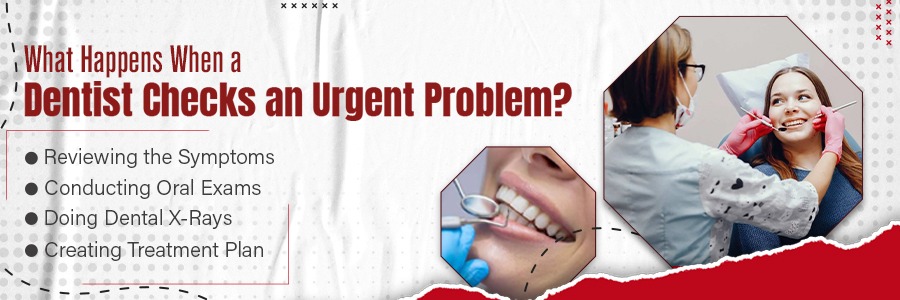
The first goal is usually to understand your symptoms and identify their cause. The dentist may examine the affected area and ask several questions before recommending treatment.
You may be asked when the problem started, whether the pain is constant, and whether chewing makes it worse. Mention swelling, sensitivity, bleeding, recent injuries, medications, and any previous treatment involving the affected tooth.
The dentist may examine the tooth, surrounding gums, bite, and nearby tissues. This helps determine whether the concern appears limited to a particular tooth or affects a larger area.
You will not necessarily need dental X-rays for every problem. Imaging may be recommended when the dentist needs additional information about areas that cannot be fully assessed through a visual examination.
After assessing the problem, the dentist can explain what they found and discuss suitable treatment options. Some problems can be treated right away, while others may require follow-up care or assessment by a dental specialist.
Treatment depends on the cause of the problem rather than the symptom alone. Two people experiencing similar tooth pain may have completely different dental conditions.
Some chipped, cracked, or damaged teeth may be repaired when enough healthy tooth structure remains. The type of restoration depends on the location and extent of the damage.
Inflammation or infection involving the internal tissue of a tooth may sometimes require root canal treatment. The dentist determines whether the tooth can be preserved and whether this treatment is appropriate.
Bleeding, swelling, and other gum concerns may require professional cleaning or periodontal treatment. The recommended approach depends on what is causing the problem and how advanced it has become.
Extraction may be considered when a tooth is severely damaged or cannot reasonably be restored. Having tooth pain alone does not automatically mean that extraction is necessary.
Some dental conditions may require treatment from an oral surgeon, endodontist, periodontist, or another specialist. A referral may simply mean that your condition requires a particular type of dental expertise.
Choosing between dental clinics should involve more than selecting whichever office appears first in a search result. Start by confirming whether the clinic provides the type of dental care you need.
When comparing trusted dental clinics in Los Angeles, consider professional qualifications, available services, appointment access, communication, and payment information.
Look at the dentist’s professional qualifications and licensing information. Healthcare decisions should be based on relevant credentials and your treatment needs rather than promotional claims alone.
Check whether the clinic provides care related to your particular concern. Some offices provide a broad range of services, while others may refer certain treatments to specialists.
Some dental offices reserve appointment time for people experiencing sudden pain or injuries. Calling ahead allows the clinic to understand your situation and explain how soon you may be seen.
Practical office hours matter when dealing with urgent problems and follow-up treatment. Check when the dental office is open and how it handles unexpected dental concerns.
If you have insurance, check whether the clinic accepts your plan when possible. Self-pay patients can ask about expected costs and available payment methods before non-urgent treatment begins.
A dentist should explain what was found and why a particular treatment is being considered. You should also have an opportunity to ask questions and understand reasonable alternatives when they are available.
Problems involving a tooth, filling, crown, gums, or other dental structures are generally best evaluated by a dentist. Dental professionals have the equipment and training needed to diagnose and treat many conditions involving teeth and gums.
Someone searching for a Los Angeles medical clinic with experienced doctors should understand that general medical care and dental care have different roles. Medical care may become important when dental symptoms are associated with broader health concerns, but it does not replace treatment of an underlying tooth problem.
Serious facial injuries, significant medical complications, or difficulty breathing or swallowing may require emergency medical assessment instead.
Having a few basic details available can help the dental team understand your health and symptoms. However, you should not delay necessary care simply because you do not have every document available.
A dental office may request identification when registering you as a patient. Bring an accepted form of identification when it is readily available.
Bring your current insurance details if you intend to use dental coverage. The office can explain what information it needs and whether your coverage applies to the planned treatment.
Tell the dentist about prescription medications, over-the-counter medicines, and other products you regularly take. Some medications may affect bleeding, healing, or treatment decisions.
Inform the dental team about any known medication or material allergies. This information can help them choose appropriate medications or dental materials when necessary.
Older X-rays or dental records may provide useful information about previous treatment. However, they are not always necessary before an urgent problem can be initially assessed.
Try to remember when your symptoms began and whether they have changed. Mention pain while chewing, temperature sensitivity, swelling, bleeding, drainage, or visible changes in the affected tooth.
Not every dental emergency can be prevented. Accidents, sports injuries, and unexpected tooth damage may happen even to people who maintain good oral hygiene.
Regular dental examinations can still help identify cavities, gum concerns, damaged restorations, and other problems before they become more advanced.
The right schedule is different for each person. Your dentist may recommend how often you should return based on your oral health, previous dental problems, existing treatments, and individual risk factors.
Do not wait several months for a routine checkup when you develop severe or worsening dental symptoms. Increasing pain, significant swelling, persistent bleeding, major tooth damage, or a loose permanent tooth should be evaluated sooner.
Contacting a dentist does not mean that extensive treatment will automatically be necessary. The first step is simply determining what is causing the problem and what type of care is appropriate.
Knowing where to go for a dental emergency can help you make an informed decision when tooth pain, swelling, or dental damage develops unexpectedly.
For most urgent conditions involving teeth and gums, contacting dental clinics that can provide timely assessment is an appropriate starting point. A dentist can examine the affected area, identify the likely cause, and discuss treatment options based on your individual situation.
Problems involving severe facial trauma, difficulty breathing or swallowing, or another potentially life-threatening complication require emergency medical attention rather than waiting for routine dental care.
Contact a dentist or emergency dental clinic for severe pain, swelling, bleeding, or a damaged tooth. Prompt evaluation can help identify the cause and the appropriate treatment.
See a dentist if tooth pain is severe, persistent, worsening, or accompanied by swelling. You can also review official U.S. health guidance for general information.
Hold the tooth by the crown, not the root, and keep it moist while seeking dental care promptly. Avoid scrubbing the tooth or allowing it to dry out.
No. Tooth pain may come from decay, cracks, gum problems, infection, or damaged dental work. A dentist must first determine the cause before recommending treatment.
Regular checkups can help identify cavities, gum problems, and damaged restorations before they become more serious. You can also find official U.S. oral health information online.

How Often Should You Visit the Dentist for a Routine Checkup?
October 16, 2026
5 Things to Know Before Visiting an X-Ray Center
October 9, 2026
Why Choosing the Nearest Medical Clinic Can Make Healthcare Easier
September 21, 2026